
By Nidhi Arora ·

Christmas packaging projects often begin with a design request before the operating brief exists. A team asks for its logo on a festive box, then discovers that the product needs a different size or that the artwork approval will take longer than expected. Separating those decisions early makes the project easier to manage.
The aim is a finished gift that represents the brand clearly and can be produced, packed and delivered on an agreed schedule.
Identify the reason for customisation
Ask what the ready option fails to do. Is the issue physical fit, a necessary opening style, a brand requirement or a specific contents layout? A clear answer helps distinguish a structural change from a decorative preference.
If the product does not fit, a logo will not fix it. Start with usable dimensions, filled weight and required supports. If the structure works but the brand needs recognition, discuss the feasible decoration or separate identity element for that specification.
Keep preference and necessity separate. A particular colour may be desirable while a product barrier is essential. Procurement decisions become more useful when the team knows which requirements can change and which must remain fixed.
Assess the ready Christmas collection first
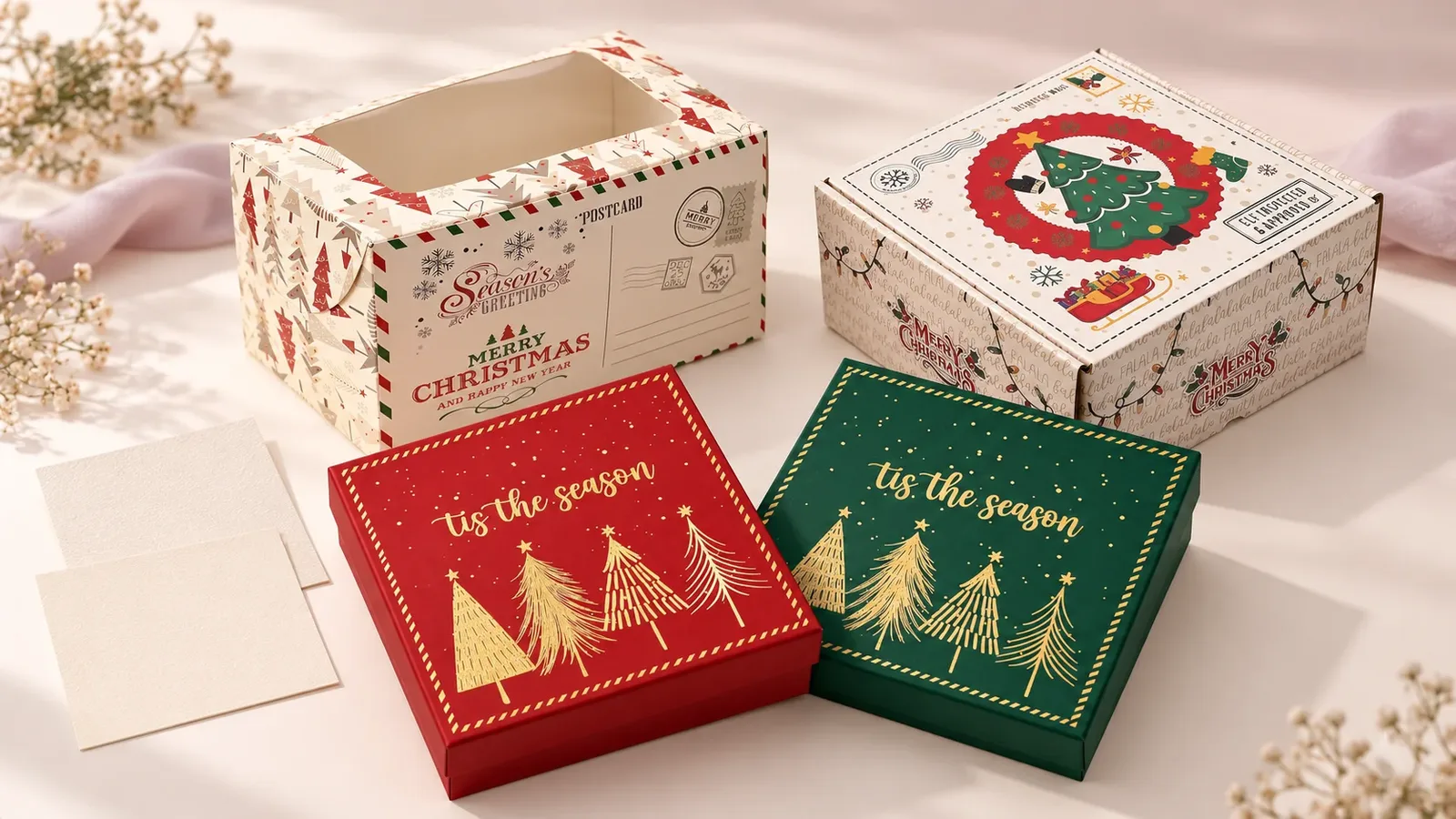
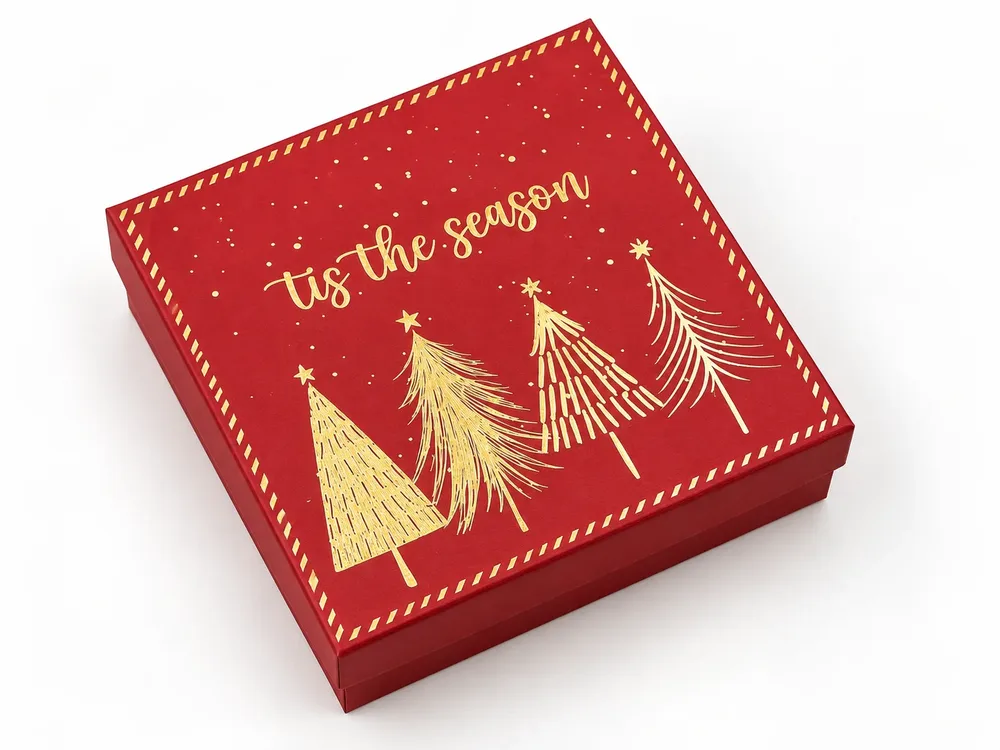
Boxly's Christmas collection includes postcard, tree-and-wreath and red or forest-green tree-design directions. These provide an existing seasonal visual identity for businesses to assess against their contents and brand tone.
A ready design is not automatically available in the required quantity. Confirm the specific item, specification and allocation. Equally, do not assume a ready box can accept any requested printing method without checking feasibility.
Where a separate card, label or other brand element is appropriate, define it as part of the project. Confirm who supplies it, how it is attached and whether it changes assembly time or the opening experience. Do not treat a small accessory as an invisible dependency.
Write a complete artwork brief
Provide the approved logo file, intended wording, preferred placement and any brand restrictions. Identify who can approve the proof. If several teams need input, collect it before sending contradictory instructions to production.
Ask what file format and artwork preparation the chosen process requires. Do not assume an image copied from a messaging app is production-ready. A readable on-screen preview does not necessarily contain the detail needed for a physical finish.
Keep one controlled version. Put the design name, revision and approval status in the project record. If a message changes, issue a clear revision rather than sending a second file with an ambiguous name and expecting the supplier to infer which is final.
Distinguish visual proof from physical approval
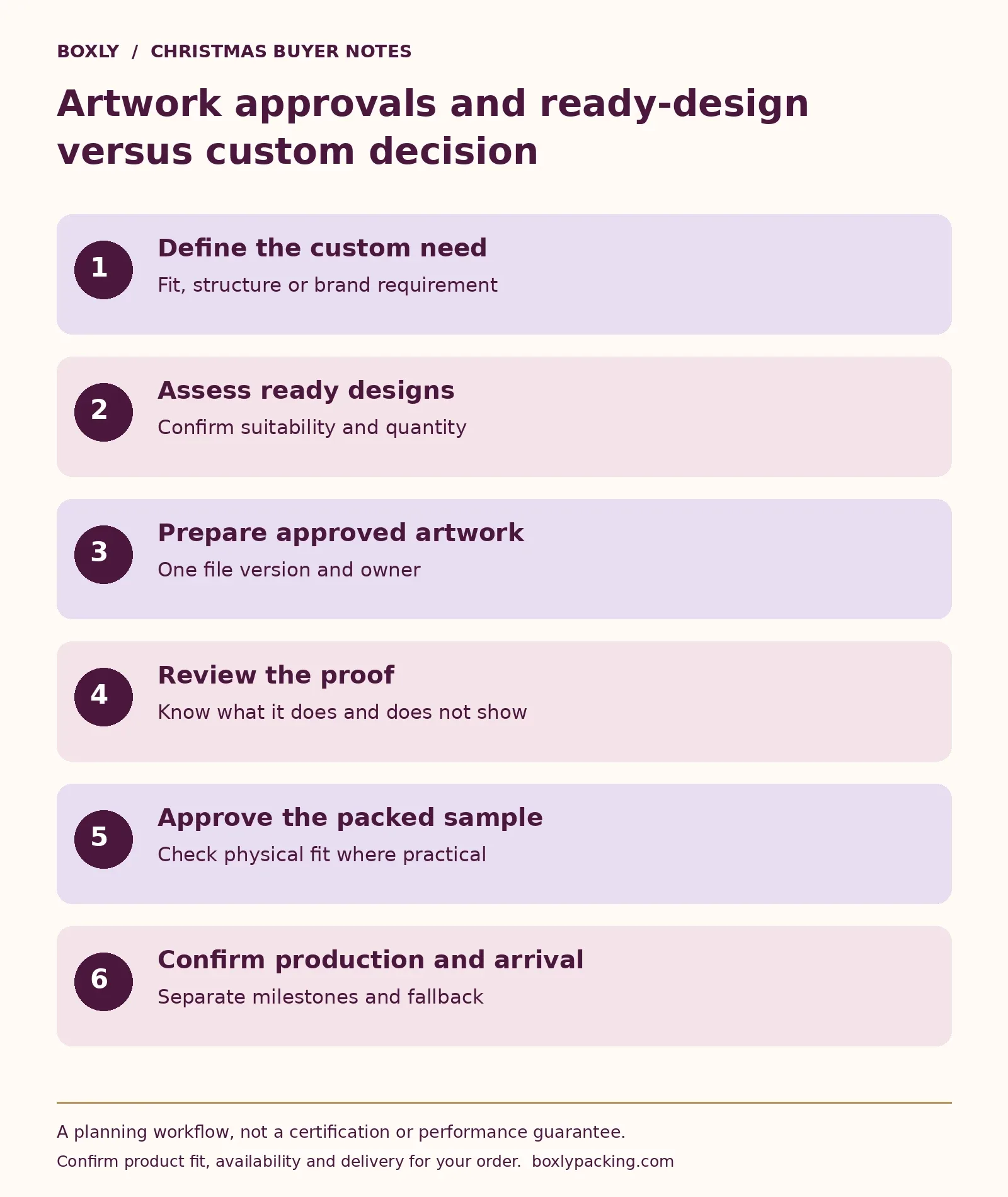
A digital proof can show placement, wording and overall composition. It cannot establish every material, colour or handling result. Ask what a proof does and does not represent for the selected process.
Where a physical sample is practical, assess it with the real contents. Check fit, appearance, lid operation and the effect of any added branding element. A decorative band that looks good flat may interfere with opening or hide essential product information when applied.
Record the approved specification separately from general inspiration images. A mood board describes a direction. It should not be mistaken for an instruction to supply every finish or accessory shown within it.
Make the production path visible
Map the order from final dimensions to artwork preparation, proof, approval, production and delivery. Ask which stages are dependent on a buyer response. A delayed approval can change the production window even when the supplier is otherwise ready.
Boxly can assess eligible custom production turnaround as short as 24 hours, subject to availability, artwork approval and order requirements. Delivery is separate. Treat that as an order-specific possibility to check, not the standard duration for every custom project.
If the deadline is fixed, decide when to stop pursuing custom changes. An approved ready design may be a better option than an unfinished bespoke concept that cannot reach the packing location in time.
Compare custom value fairly
Compare the complete project, including artwork preparation, samples, required components and delivery. Ask which costs apply to the current batch and which may apply again on a reorder. Obtain an explicit quotation rather than assuming how a supplier prices changes.
Consider operational value as well as appearance. A custom format may reduce packing complexity if it solves a genuine fit problem. A decorative change that increases assembly effort may need a stronger reason to justify it.
Keep the first reorder in mind. Save the approved files and specification so the next enquiry starts from a defined pack rather than a photograph and a memory of what was supplied.
Put artwork approval in writing
The final approval should identify the file version, selected specification, wording and placement. Keep the approver's identity and date with the project record. If a revision follows, make it clear whether the earlier approval is withdrawn and whether the supplier has accepted the changed instruction.
Ask which details require separate confirmation beyond the digital proof. Colour, finish, material behaviour and packed fit may need different checks. Do not use a visual mockup to imply a physical capability that has not been agreed for the chosen production process.
Evaluate branding in the opening sequence
Place the proposed card, label or other confirmed element on a representative pack. Check what the buyer sees before opening, what the recipient sees first and whether any essential information is covered. Branding should improve recognition without making the gift harder to use.
If the ready Christmas artwork already carries a strong seasonal message, a restrained additional element may be enough. Avoid adding decoration simply because an empty space exists. Each component brings a supply, approval and assembly decision that belongs in the complete project plan.
Make the commercial comparison explicit
Request quotations for the actual alternatives under consideration. Compare the confirmed ready design with the proposed custom specification on the same contents and delivery basis. Identify artwork, samples, components, taxes and freight where applicable instead of assuming all costs sit inside the unit price.
Consider who performs the final assembly. A separate branding accessory may be appropriate, but its application still takes time and needs a consistent method. Include that work in the decision. The most suitable choice is the one that meets the business requirement, not automatically the one described as bespoke.
Keep a practical fallback
Define when the project must move from custom development to an approved ready option if the deadline is fixed. Identify which alternative preserves product fit and an honest customer offer. Do not leave that decision until the production window has already disappeared.
For a Boxly enquiry, send the contents measurements, quantity, preferred design, artwork status and required arrival date. Ask what can be confirmed now and which decisions still control timing. Retain the approved specification and files for reorders, but recheck availability and current terms. A disciplined custom project produces both a festive box and a reliable record of how to order it again without starting from an ambiguous photograph.
Confirm your Christmas packaging with Boxly
Browse the Boxly Christmas collection, then WhatsApp Boxly with your selected design, packed-product dimensions, quantity, branding needs, delivery PIN and required arrival date. Request current availability, the complete quotation and written confirmation of the final specification. Food-contact materials, inserts, accessories and transport protection require appropriate confirmation; do not infer them from a photograph. Displayed contents are styling references unless expressly included.
Eligible custom production turnaround can be as short as 24 hours, subject to availability, artwork approval and order requirements. Delivery is confirmed separately. For available designs, ask about same-day Delhi NCR delivery for your specific order; stock, order confirmation, any applicable cut-off and delivery location determine what can be offered.
Free Delhi NCR delivery applies only to eligible orders above 10,000 boxes, not exactly 10,000 boxes and not a rupee threshold. Confirm coverage and order terms before payment. A useful festive order begins with a clear product brief and ends with an agreed receiving plan.
Production and delivery are confirmed separately for each order. Catalogue prices are authoritative for the selected design; confirm the complete quotation and any additional charges before ordering.
Frequently asked questions
Is custom packaging always more suitable for a brand?
No. Suitability depends on fit, presentation, quantity and deadline. A ready Christmas design may work well when the product fits and the brand can be represented through an appropriate approved element.
Can a logo be added to any ready Christmas box?
Do not assume that. Ask about the selected surface, process, placement and quantity. Feasibility, artwork preparation and timing need confirmation before the design is promised to a customer.
Does approving a digital proof confirm the physical finish?
Only to the extent stated in the approval process. Clarify what the proof represents and whether a physical sample is required. Keep artwork approval and material or packed-fit approval distinct.
What should we do when the deadline is too close for custom work?
Ask which suitable ready designs can be confirmed and whether a separate brand element is feasible. Decide the fallback promptly, document it and update the customer-facing presentation before accepting further orders.
How should I identify the reason for customisation?
Ask what the ready option fails to do. Is the issue physical fit, a necessary opening style, a brand requirement or a specific contents layout? A clear answer helps distinguish a structural change from a decorative preference.
How should I assess the ready Christmas collection first?
Boxly's Christmas collection includes postcard, tree-and-wreath and red or forest-green tree-design directions. These provide an existing seasonal visual identity for businesses to assess against their contents and brand tone.
How should I write a complete artwork brief?
Provide the approved logo file, intended wording, preferred placement and any brand restrictions. Identify who can approve the proof. If several teams need input, collect it before sending contradictory instructions to production.
How should I distinguish visual proof from physical approval?
A digital proof can show placement, wording and overall composition. It cannot establish every material, colour or handling result. Ask what a proof does and does not represent for the selected process.
How should I make the production path visible?
Map the order from final dimensions to artwork preparation, proof, approval, production and delivery. Ask which stages are dependent on a buyer response. A delayed approval can change the production window even when the supplier is otherwise ready.
How should I compare custom value fairly?
Compare the complete project, including artwork preparation, samples, required components and delivery. Ask which costs apply to the current batch and which may apply again on a reorder. Obtain an explicit quotation rather than assuming how a supplier prices changes.
How should I put artwork approval in writing?
The final approval should identify the file version, selected specification, wording and placement. Keep the approver's identity and date with the project record. If a revision follows, make it clear whether the earlier approval is withdrawn and whether the supplier has accepted the changed instruction.
How should I evaluate branding in the opening sequence?
Place the proposed card, label or other confirmed element on a representative pack. Check what the buyer sees before opening, what the recipient sees first and whether any essential information is covered. Branding should improve recognition without making the gift harder to use.
How should I make the commercial comparison explicit?
Request quotations for the actual alternatives under consideration. Compare the confirmed ready design with the proposed custom specification on the same contents and delivery basis. Identify artwork, samples, components, taxes and freight where applicable instead of assuming all costs sit inside the unit price.
How should I keep a practical fallback?
Define when the project must move from custom development to an approved ready option if the deadline is fixed. Identify which alternative preserves product fit and an honest customer offer. Do not leave that decision until the production window has already disappeared.
What details should I send Boxly before ordering?
Browse the Christmas collection and send your selected design, packed-product dimensions, quantity, branding needs, delivery PIN and required arrival date. Request current availability, the complete quotation and written confirmation of the final specification.
Topics: custom Christmas boxes India, branded Christmas packaging, Christmas box logo printing, custom festive gift boxes
Request a packaging quote.
Share what you are packing, its dimensions, your quantity, branding, city/PIN code and required date.
More from the blog
- Christmas Cake Boxes in Delhi: A Bakery Buying Guide for Lutyens and Central Delhi
- Christmas Cookie Packaging for Vasant Vihar Bakeries: Build a Gift-Ready Collection
- Christmas Bakery Gift Boxes for Connaught Place Corporate Orders
- Christmas Dessert Packaging for Greater Kailash Bakeries: Presentation Without Packing Chaos
- Urgent Christmas Packaging for Defence Colony Bakeries: A Rush-Order Checklist
- Corporate Christmas Gift Boxes in India: Plan a Collection That Works Beyond the Photo
- Christmas Hamper Packaging in India: Choose the Box Around the Contents
- Christmas Packaging for Online Brands: Separate Gift Presentation from Shipping Protection
- Christmas Chocolate Gift Packaging: A Practical Guide for Indian Brands
- Christmas Packaging for Hotels and Cafes: Coordinate Festive Takeaway and Gifting
- Christmas Gift Box Size Guide: Measure Contents, Not Just the Box Photograph
- Bulk Christmas Packaging in India: Compare Quotes, Samples and Delivery Terms
- Red or Green Christmas Gift Boxes? Build a Festive Range Without Multiplying SKUs
- Christmas Packaging Order Timeline: Work Backwards from Your Customer Deadline
- How to Plan Diwali Packaging Orders and Approval Milestones
- What Makes a Brief Eligible for 24-Hour Custom Packaging Production?
- Urgent Custom Packaging in Delhi: Send These Details for an Availability Check
- What Affects Turnaround Time for Custom Boxes?
- Express Custom Packaging in India: Production Time Is Not Delivery Time
- Last-Minute Festive Packaging: Simplify the Brief Before Requesting a Quote
- How to Prepare a Rush Packaging Order for Delhi NCR
- Quick Custom Packaging Starts with Artwork and Specification Readiness
- Urgent Gift-Box Printing: Approval Checklist Before Production
- Corporate Gift Packaging in India: A Buyer Checklist for Internal Teams
- Plan branded corporate gift boxes before artwork approval
- Design custom corporate hamper boxes around the gifts
- Bulk corporate gift boxes: prepare a specification procurement can approve
- Corporate festive packaging: coordinate design, quantity and deadlines
- How to Choose Custom Boxes for Your Product and Order Quantity
- What to Ask a Premium Packaging Supplier Before Ordering
- Premium packaging for a considered gifting presentation
- Plan custom packaging around your business requirements

